Echo Archive
Designing a product that preserves the emotional soundtrack of pregnancy.
- Project
Digital Experience Design Studio • UTS
- Duration
8 Weeks
- Team
5 Designers
- Deliverables
Research
Synthesis
Concept Development
A university research project exploring how technology can support emotional wellbeing, identity and memory during one of life's biggest transitions.
Overview
Most pregnancy apps help mothers track physical milestones, appointments and fetal development.
Our research suggested that something equally important was missing.
Pregnancy is not only a medical journey, it is an emotional transformation. Yet while existing products focus on what is happening to the body, few support the lived emotional experience of becoming a mother.
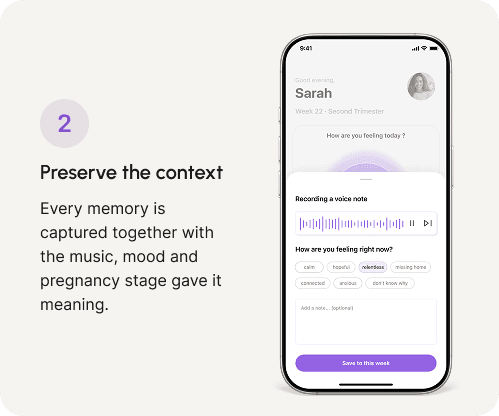
Using Experience-Centred Design, we explored how music could become more than a tool for relaxation, becoming a medium for emotional regulation, cultural connection and preserving meaningful memories.
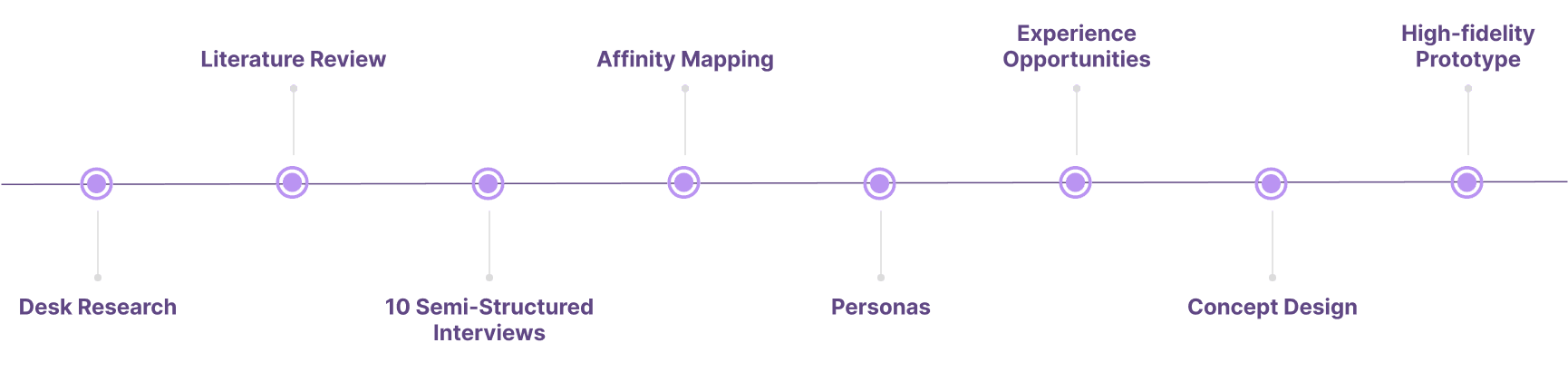
Research Journey
What We Learned
We focused on understanding the everyday emotional experiences of expectant mothers.
Through interviews and synthesis, five themes consistently emerged.
Music As Emotional Regulation
Participants intentionally used music to reduce anxiety, regain calm and navigate overwhelming emotions throughout pregnancy.
Music As A Cultural Connection
For migrant mothers, familiar songs and native languages created a powerful sense of home, preserving cultural identity while connecting with their unborn child.
Pregnancy Can Feel Emotionally Isolating
While physical milestones were well supported, participants often lacked a safe space to process the emotional aspects of pregnancy, turning to music as a private form of comfort.
Sound Strengthens Maternal Bonding
Singing and sharing music helped transform pregnancy from an abstract experience into a tangible relationship with their baby.
Current Products Overlook Emotional Needs
Existing pregnancy apps focused on tracking symptoms and milestones, leaving little support for emotional wellbeing, reflection or meaningful memory-making.
From Patterns To Insight
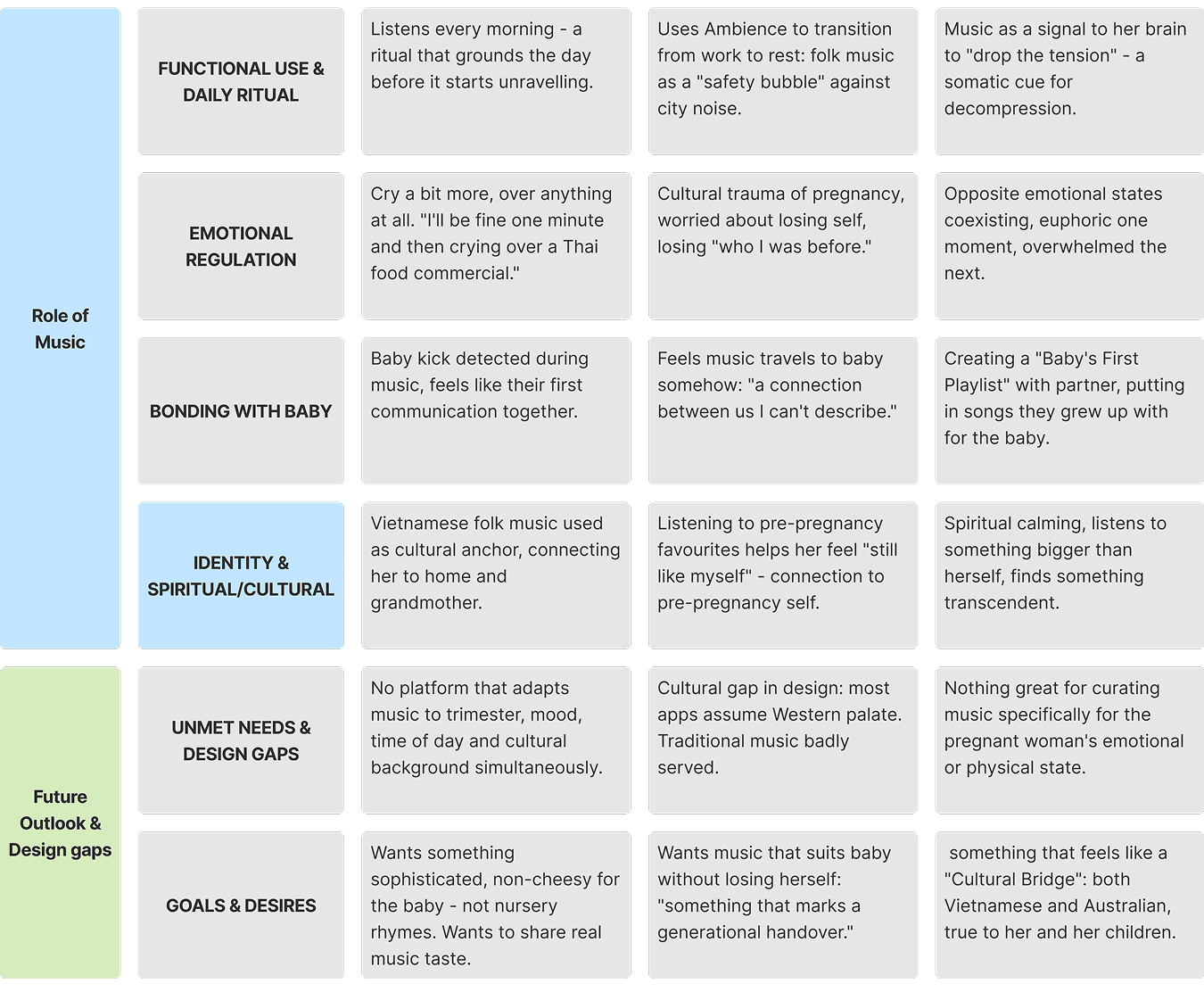
As interviews accumulated, we organised hundreds of observations through affinity mapping.
We looked for recurring emotional experiences shared across participants.
One pattern appeared repeatedly:
Music wasn't simply helping mothers feel calmer. It became a bridge between identity, culture, family and motherhood.
This shifted Echo Archive from a pregnancy companion into a platform for preserving meaningful moments through sound.
Translating Research Into Design Opportunities
We heard
So we designed
Mothers intentionally used music to regulate emotions.
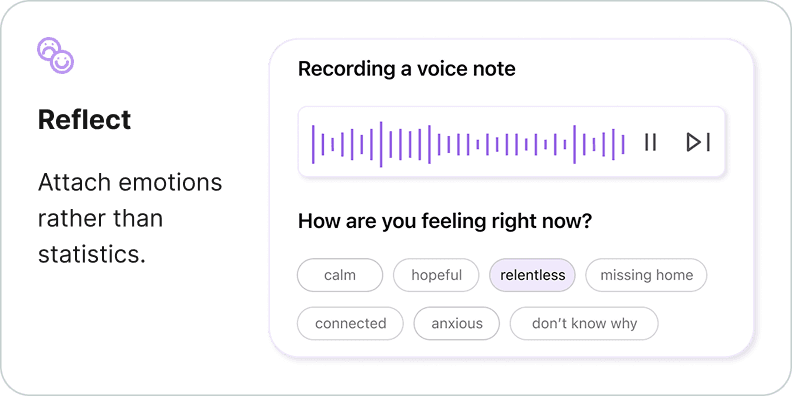
Emotional voice journals instead of symptom tracking.
Traditional songs connected mothers to home.
Voice recordings, lullabies and cultural memory collections.
Existing pregnancy apps prioritised milestones and checklists.
Reflection-first interactions centred around emotional wellbeing.
Pregnancy often felt emotionally isolating.
A private, supportive space for recording thoughts and memories.
Introducing Echo Archive
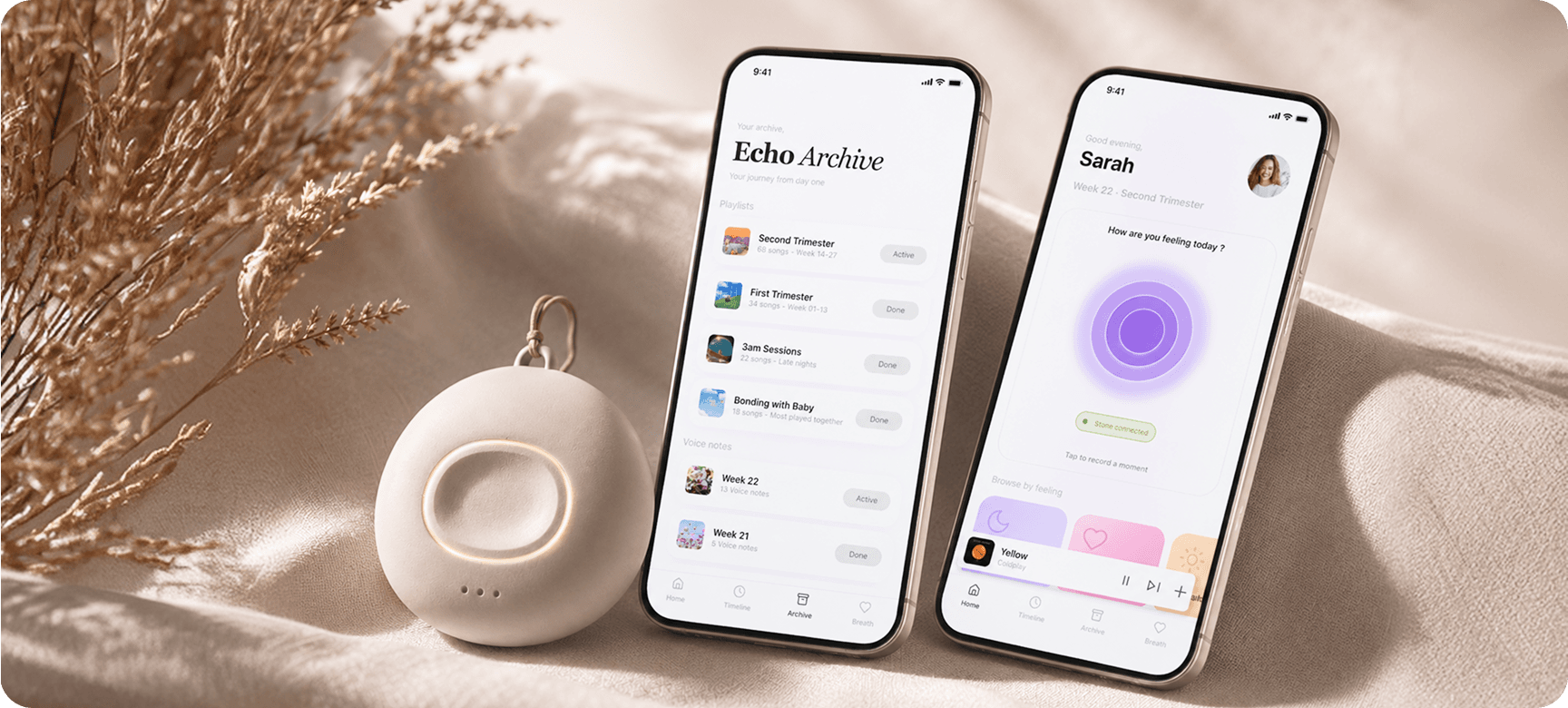
Echo Archive is a mobile experience paired with a tactile companion device called the Worry Stone.
Together, they help mothers capture voice notes, meaningful songs and emotional reflections throughout pregnancy, gradually creating a personal archive that can later be shared with their child.
Designing An Emotional Companion
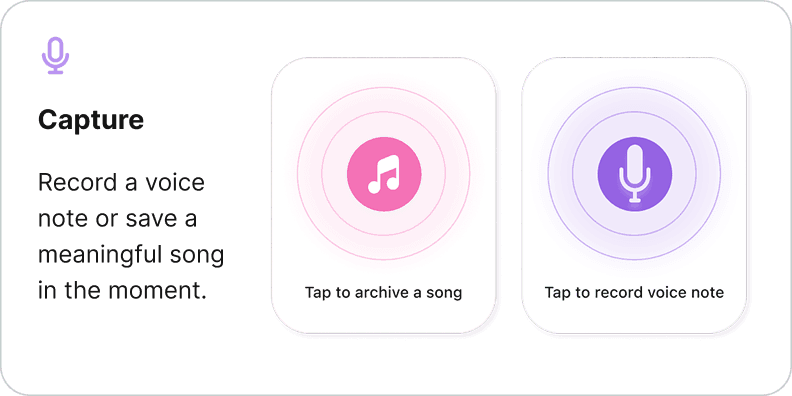
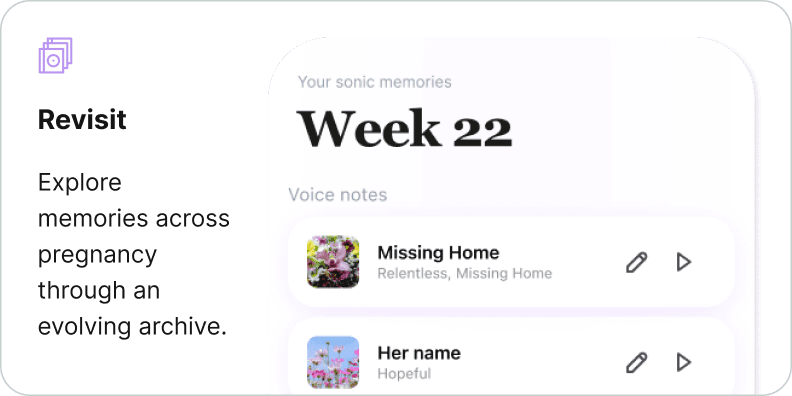
The experience was designed around four simple moments.
The Worry Stone
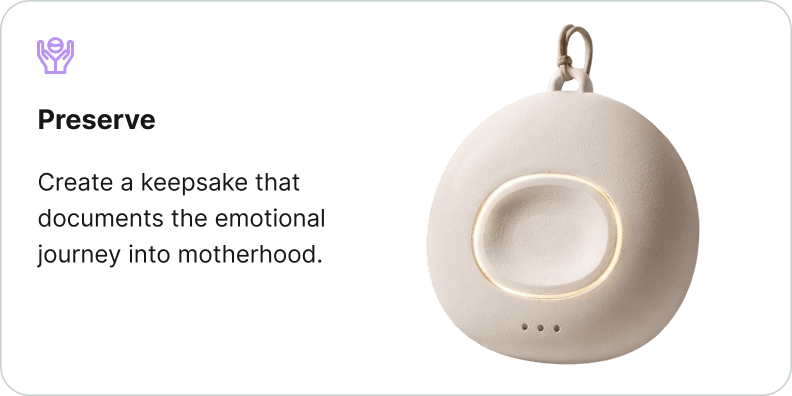
At the heart of Echo Archive is the Worry Stone, a tactile companion that transforms fleeting moments into lasting memories.
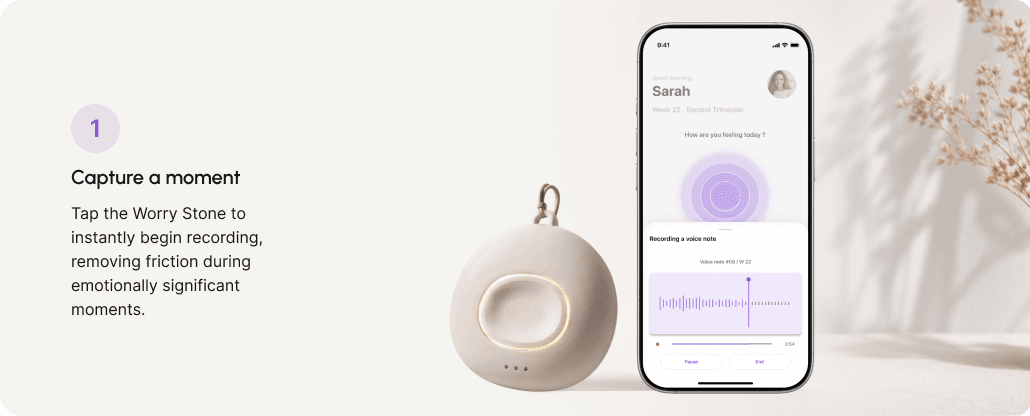
Inspired by traditional worry stones, it offers mothers a familiar object to hold during emotionally significant moments. A single tap wakes the app through Bluetooth, allowing voice notes to be captured instantly without unlocking a phone, reducing friction when emotions are most immediate.
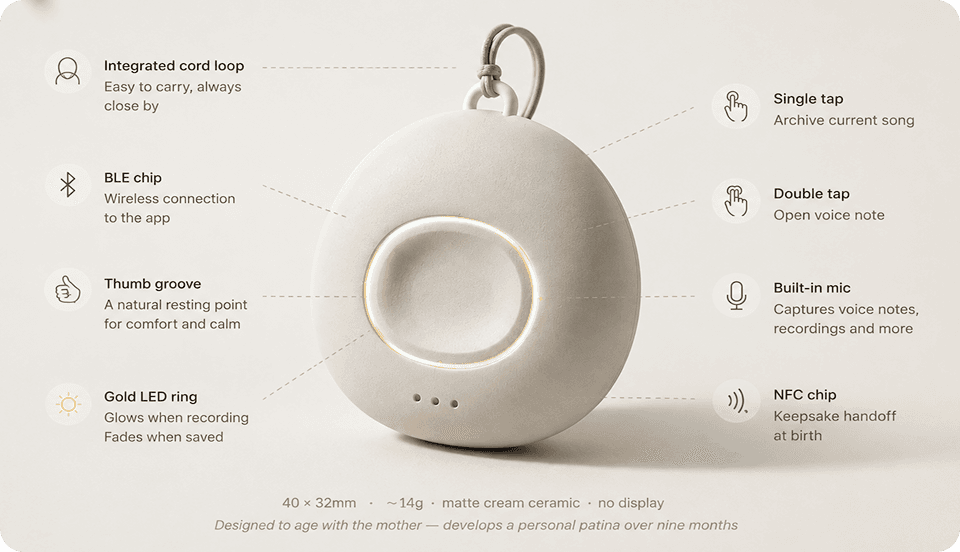
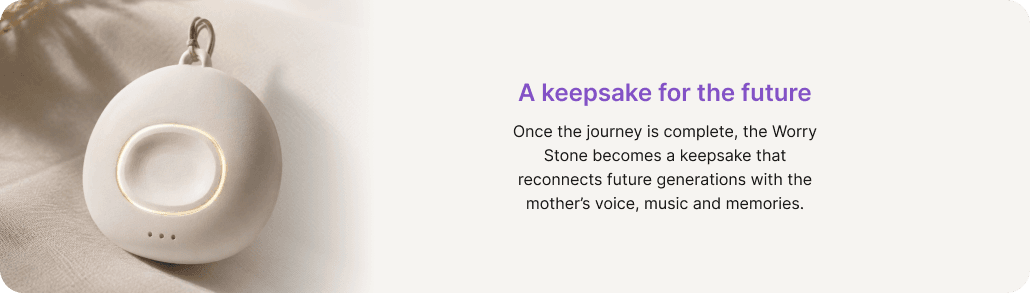
As memories accumulate, the stone evolves from a simple recording trigger into a physical keepsake. Once the pregnancy archive is complete, it is paired with the mother's digital collection through an embedded NFC chip. Years later, her child can simply tap the stone against a phone to revisit the songs, voice notes and reflections recorded throughout the pregnancy.
Rather than replacing the app, the Worry Stone gives the experience a tangible form, one that supports emotional wellbeing in the present while preserving a deeply personal story for the future.
Experience Walkthrough
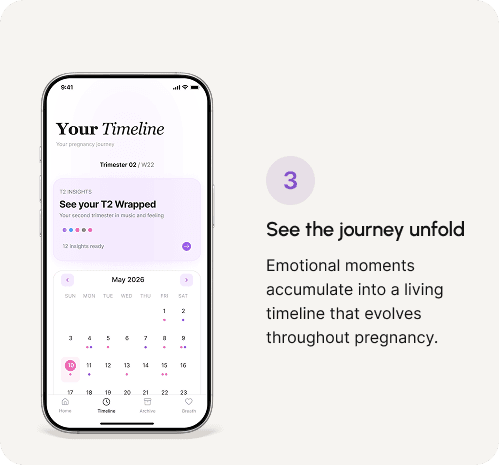
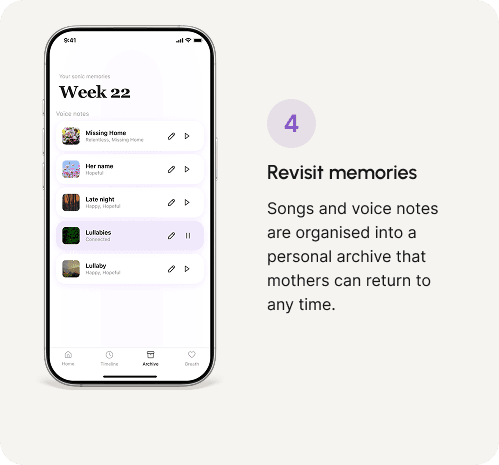
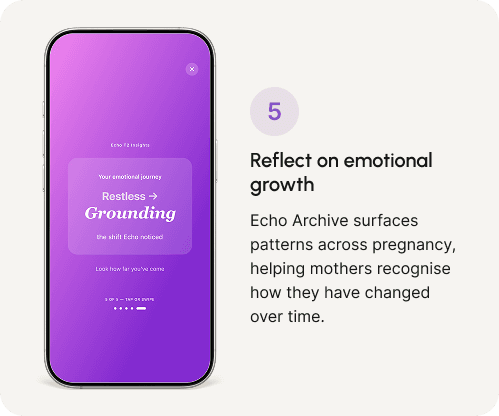
Designing For Meaning
This project explored how interaction design can create emotional value. Three principles guided every design decision.
Preserve, Don't Interrupt
Interactions remain lightweight to avoid disrupting emotional moments.
Emotion Before Information
The experience captures feelings rather than clinical data.
Memory Through Multiple Senses
Voice, music and touch work together to create stronger emotional recall.
Reflection
Before this studio, I approached design primarily as a process of solving problems efficiently. Through Experience-Centred Design, I learned that not every design challenge is about reducing friction. Sometimes the goal is to create space for emotion, reflection and meaning.
It also strengthened my research practice: conducting interviews, synthesising qualitative data and translating human experiences into product opportunities.
Those skills continue to shape how I approach product design today, from enterprise platforms at Woolworths to consumer-facing experiences.
Next Projects